Winged insects coming out of a wall or window in early spring may be termite swarmers. UGA Extension says swarmers fly most commonly February to April in Georgia, and that native subterranean termites (Reticulitermes) are the state's more common ones. Leave any mud tubes alone, save a few swarmers or wings, and have a licensed company inspect.
Key facts
- Usual termite
- Native subterranean (Reticulitermes species)
- Formosan termite
- Found at a number of Georgia sites, but rare in Georgia
- Swarm season
- Most commonly February to April in Georgia
- Signs
- Swarmers, mud tubes, shed wings, damaged wood
- Who checks
- A company licensed by the Georgia Department of Agriculture
Georgia's termites
UGA Extension's Circular 868 names native subterranean termites, Reticulitermes species, as Georgia's more common termites. It also covers the Formosan subterranean termite: infestations have been found at a number of sites in Georgia, yet the circular says the Formosan termite is rare here. Your inspector can tell you which one you have.
When they swarm
Swarmers are the winged male and female termites. UGA Extension entomologist Dan Suiter's article on preventing termites in Georgia homes says they fly in the spring each year, most commonly February to April in Georgia.
Signs UGA points to
- Swarmers. UGA calls them a telltale sign of an infestation.
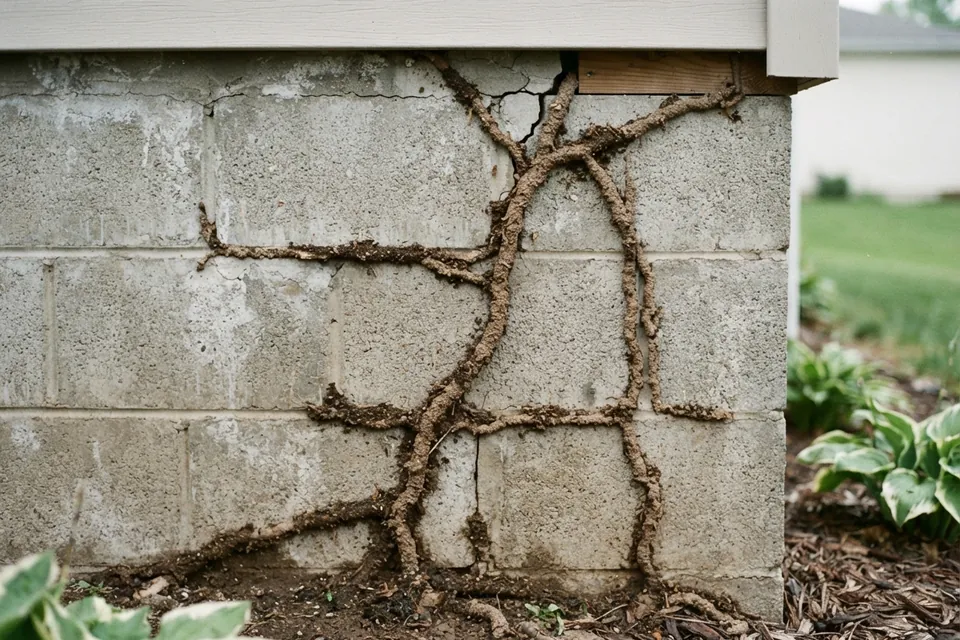
- Mud tubes. Hollow tubes of moist soil and termite saliva, built in or on the house.
- Shed wings. Swarmers lose their wings soon after flying. Circular 868 suggests looking for dead, dried swarmers or wings on window sills.
- Damaged wood.
Want a price for your home? Call a local pest control company for a written quote.
Phone line opening soonWhat to do first
- Leave mud tubes as they are. Let the inspector see them undisturbed.
- Save a sample. Sweep a few swarmers or wings into a sealed bag or jar.
- Book an inspection. UGA suggests contacting a local termite and pest control company. Search the company on the Georgia Department of Agriculture license search first.
- Don't treat it yourself. Leave treatment to a licensed company; in Georgia, termite work comes with a written contract.
Fixr's national figure for a one-time termite inspection is $150 to $350. Contract rules and treatment prices are on the termite treatment cost page.
When you call: 4 questions to ask
- What's your Georgia Department of Agriculture license number, and who is your Certified Operator?
- Will the technician who comes out hold a GDA employee registration or certification?
- For termites, is the guaranty retreatment only, or retreatment plus repair of damage?
- If I'm selling the house, can you issue the Official Georgia Wood Infestation Inspection Report?
A fair written quote shows the pest, the treatment type, the areas covered, every charge, the visit schedule, any guaranty and how to cancel. Check any contractor's license on the Georgia Department of Agriculture's structural pest control page before work starts.
What happens when you call
- You're connectedStraight to a local pest control company that serves your area and takes calls like yours.
- You get a priceDescribe the problem, ask for a written quote and their license number. No obligation.
Common questions
When do termites swarm in Atlanta?
UGA Extension says swarmers fly in the spring, most commonly February to April in Georgia.
Are Formosan termites a problem in Georgia?
UGA's Circular 868 says Formosan subterranean termite infestations have been found at a number of sites in Georgia, but that the Formosan termite is rare in the state. Native subterranean termites are the more common ones.
Should I break open the mud tubes?
No. Leave them for the inspector, who uses them to see where the termites are travelling.
Can I treat termites myself?
Have a company licensed by the Georgia Department of Agriculture inspect instead. Georgia requires licensees to give a written contract for termite work.
Related guides
Sources
- UGA Extension Circular 868: Identifying the Formosan Subterranean Termite
- UGA Extension: Preventing termites in Georgia homes
- Georgia Department of Agriculture: Structural pest control
- Fixr: Termite exterminator cost
Costs are typical ranges. Your quote depends on your home. Rules and rebates change; check the original source before you rely on a figure. Something wrong? Tell us via the contact on the Impressum page.