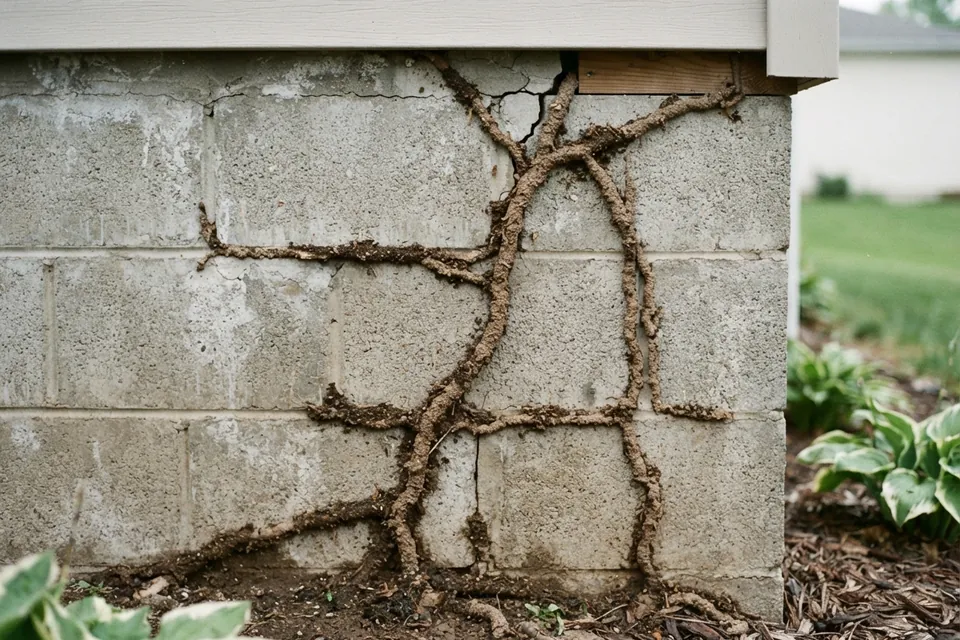
Homes around Chattanooga deal with native subterranean termites. UT Extension lists three species for Tennessee; the eastern subterranean termite often flies between March and May. Winged insects at a window, pencil-width mud tubes and wood hollowed into thin layers are the warning signs. Leave the tubes alone, save a few swarmers and have a TDA-chartered company inspect.
Key facts
- Reticulitermes flavipes (eastern)
- Often flies March to May
- R. virginicus (southeastern)
- Flies April through June or in the fall
- R. hageni (light southeastern)
- May fly August to October
- Formosan termite
- Introduced to the Memphis area in the past; not established
- Drywood termites
- Occasionally introduced in infested furniture or wooden pieces
- Professional inspection
- At least annually (UT Extension)
The three that live here
UT Extension's PB1344, Subterranean Termite Control names the three most common termites in Tennessee. All three are subterranean termites.
| Common name | Species | Usual flight time (PB1344) |
|---|---|---|
| Eastern subterranean termite | Reticulitermes flavipes | Often March to May |
| Southeastern subterranean termite | R. virginicus | April through June, or in the fall |
| Light southeastern subterranean termite | R. hageni | May fly August to October |
Those months come from a statewide publication; UT has no separate calendar for Hamilton County. PB1344 also warns that mating flights can occur at other times, especially in heated structures. A swarm outside the usual months still counts.
Less common arrivals
The Formosan subterranean termite reached the Memphis area in the past, PB1344 says, but is not established. Formosan termites found in Tennessee should be reported to TDA's Division of Regulatory Services. Drywood or powderpost termites are occasionally introduced into the state through infested furniture or other wooden pieces.
Want a price for your home? Call a local pest control company for a written quote.
Phone line opening soonWhat termite activity looks like
- Mud tubes. PB1344 says shelter tubes are usually the width of a pencil but may be wider. Check foundation walls, piers and the crawlspace.
- Swarmers. These winged termites are often found at windows.
- Hollowed wood. Termites eat the soft grain, leaving a thin shell outside and a layered look inside. Mud often sits in the eaten layers.
First steps
- Leave tubes intact. They show an inspector where termites are traveling.
- Save a few swarmers. Seal them in a small jar or a plastic bag for identification.
- Book an inspection with a chartered firm. Check the charter number and applicator card first; the pest control overview walks through it.
- Don't treat termites yourself. In Tennessee, termite control comes with a written contract and a retreatment warranty, covered on the termite cost page.
Even with no signs, UT Extension says a thorough inspection should be conducted at least annually by a professional. Fixr's national average for a one-time termite inspection is $150 to $350.
When you call: 4 questions to ask
- Is your TDA charter number shown on the vehicle you'll send?
- Is the person treating my home commercially certified in this category?
- Will the termite contract include a damage guarantee, or retreatment only?
- Will you show me the termite activity or damage before I sign?
A fair written quote shows the pest found, the areas to be treated, the price of each part, the visit schedule, the warranty terms and how to cancel. Check any contractor's license on the Tennessee Department of Agriculture's pesticide pages before work starts.
What happens when you call
- You're connectedStraight to a local pest control company that serves your area and takes calls like yours.
- You get a priceDescribe the problem, ask for a written quote and their license number. No obligation.
Common questions
Which termites are found in Chattanooga?
UT Extension's statewide guide lists the eastern, southeastern and light southeastern subterranean termites as Tennessee's three most common species. It has no Hamilton County breakdown.
What month do termites swarm here?
The eastern subterranean termite often flies March to May. R. virginicus flies April through June or in the fall, and R. hageni may fly August to October. Flights can happen at other times in heated buildings.
Do drywood termites live in Tennessee?
UT's PB1344 says drywood or powderpost termites are occasionally introduced through infested furniture or other wooden pieces.
Can I knock down mud tubes?
No. Tubes are evidence a chartered inspector will want to see in place. Keep a few swarmers in a sealed bag and schedule the inspection.
Related guides
Sources
- UT Extension PB1344: Subterranean Termite Control
- Tennessee Department of Agriculture: Certification, licensing and charters
- Tennessee Department of Agriculture: Pesticide consumer tips
- Fixr: Termite exterminator cost
Costs are typical ranges. Your quote depends on your home. Rules and rebates change; check the original source before you rely on a figure. Something wrong? Tell us via the contact on the Impressum page.