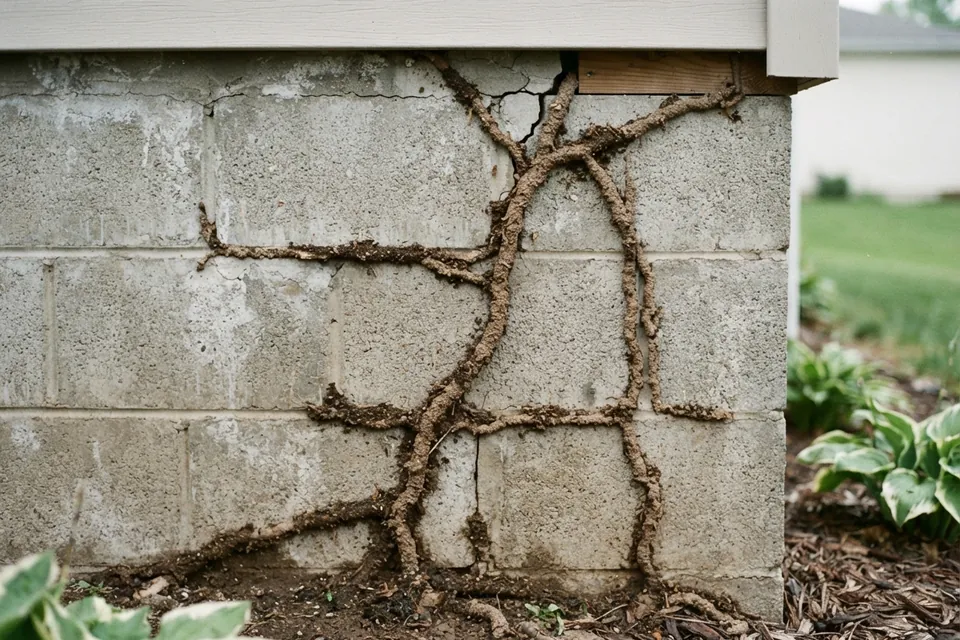
The termite OSU Extension describes for Ohio is the Eastern subterranean termite (Reticulitermes flavipes), and it rates the state's risk moderate to heavy. In Ohio these termites swarm over spring and early summer. Winged swarmers indoors, shed wings or mud tubes near the foundation are reasons to book an inspection by a company you have looked up on ODA's license search.
Key facts
- Species
- Eastern subterranean termite (Reticulitermes flavipes)
- Ohio risk
- Moderate to heavy (OSU Extension)
- Swarm season
- Over spring and early summer
- Most common way it is found
- Swarming
- Inspection
- $150 to $350, one-time visit (national, Fixr)
One species to know
OSU Extension's May 13, 2024 BYGL article by Suranga Basnagala, Tae-Young Lee and Kayla I. Perry calls the Eastern subterranean termite the most common and widely distributed termite species in the continental United States. For Ohio, it is the only species the article names, with risk rated moderate to heavy.
When they fly
The article says that in Ohio, Eastern subterranean termites swarm over spring and early summer. Winged termites are usually released in spring. A swarm in winter is uncommon, though a warm spot in or near a building can rarely set one off.
Signs OSU describes
- Swarmers. The BYGL writers call swarming the most common way a subterranean termite infestation is detected. Look near windows and lights.
- Shed wings on the ground, another sign of an active infestation in a building.
- Mud tubes. They are frequently seen on outer walls and pillars close to the soil.
- Damaged wood. Galleries follow the grain and hold dirt and fecal spots. The surface can look whole while the wood under it is hollow.
Want a price for your home? Call a local pest control company for a written quote.
Phone line opening soonYour first moves
- Leave mud tubes and damaged wood as they are. An inspector needs to see them.
- If swarmers are inside, collect a few in a sealed bag or jar so a professional can identify them.
- Take dated photos of what you found and where.
- Search the company on ODA's Business License Verification before it comes out, then ask for an inspection.
Don't try to treat termites yourself. If anyone uses a pesticide in your home, the label rules: read and follow it, and keep children and pets away. After an exposure, call Poison Control at (800) 222-1222. For trouble breathing, call 911.
Ants that get mistaken for trouble
Not every winged or wood-loving insect is a termite. OSU's ant fact sheet says carpenter ants are the largest ants found in Ohio and rank number one in inquiries over all other ants. Let the inspector sort out which one you have.
For prices and what to get in writing, see the termite cost page. Ongoing dampness near the foundation is worth fixing too; our water damage page covers leaks.
When you call: 4 questions to ask
- What name is your Pesticide Business License under with the Ohio Department of Agriculture?
- Who will treat my home, and do they hold a commercial applicator license?
- Will you give me the pesticide, amount and date in writing after you treat?
- For termites, what does your agreement promise: retreatment, repairs, or neither?
A fair written quote shows the pest found, the treatment and the areas covered, the total price and any renewal fee, what is promised if pests return, and how to cancel. Check any contractor's license on the Ohio Department of Agriculture's pesticide license verification before work starts.
What happens when you call
- You're connectedStraight to a local pest control company that serves your area and takes calls like yours.
- You get a priceDescribe the problem, ask for a written quote and their license number. No obligation.
Common questions
When do termites swarm in Columbus?
OSU Extension says that in Ohio, Eastern subterranean termites swarm over spring and early summer. Winter swarms are uncommon.
Are termites common in Ohio?
OSU Extension rates Ohio's infestation risk moderate to heavy for the Eastern subterranean termite.
I found mud tubes on my foundation. Should I scrape them off?
Leave them in place so an inspector can see them. OSU says mud tubes are frequently seen on outer walls and pillars close to the soil around infested buildings.
What does a termite inspection cost?
Fixr gives $150 to $350 nationally for a one-time inspection visit.
Related guides
Sources
- OSU Extension BYGL: Eastern subterranean termites (May 13, 2024)
- OSU Extension HYG-2064: Ants In and Around the Home
- Ohio Department of Agriculture: Pesticides (Pesticide Regulation Program, license verification, WDI inspections)
- Ohio Department of Agriculture: Pesticide Complaint Handout (REV 11/2025)
- Fixr: Termite exterminator cost
Costs are typical ranges. Your quote depends on your home. Rules and rebates change; check the original source before you rely on a figure. Something wrong? Tell us via the contact on the Impressum page.