Stop running water anywhere in the house, because every flush and every load of laundry comes back up at the lowest drain. Keep people and pets out of the sewage. One slow fixture is a local clog; several low drains backing up together points to the main line. In Denver that line, the lateral, is the property owner's up to and including the tap into the city main.
Key facts
- 1. Water use
- Stop all of it: taps, toilets, dishwasher, washing machine
- 2. Contact
- Keep out of the sewage; it is contaminated
- Who owns the lateral
- The property owner, up to and including the tap into the main (City and County of Denver)
- City sewer emergencies
- The emergency sewage number on Denver Water's emergencies page
- Insurance
- Sewer backup is additional coverage you may need to buy (Colorado Division of Insurance)
- Cleanup
- Water damage restoration: $1,200–$5,000 (Fixr national average range)
Rule out the simple things
- Stop every tap, flush and appliance: wastewater from upstairs has to pass the blockage, and when it cannot, it rises out of the lowest opening.
- Tell the whole household: one person running a shower two floors up can undo all the care being taken in the basement.
- Shut the door on the affected room: sewage carries bacteria, and children and animals do not know to stay out of it.
Water use stopped and the area closed off? Call a local plumber for the line, then keep reading.
Phone line opening soonHave this ready when you call
- Your address
- Where the water is and whether the main is off
- When it started
- Count the drains involved: a single sink or toilet suggests a clog near that fixture, while a floor drain, tub and toilet together suggest the main line.
- Stay out of water that reaches outlets or cords: contaminated water conducts electricity like any other, so only switch breakers from a dry spot.
- Photograph the room before anything is moved: an insurer with sewer backup coverage will want to see the water line and the damaged items.
- Open windows: moving air eases the smell and starts the drying.
- Ask a next-door neighbor whether their drains are slow too: trouble in several houses at once suggests the public main, and that is the city's side.
Signs it is not simple
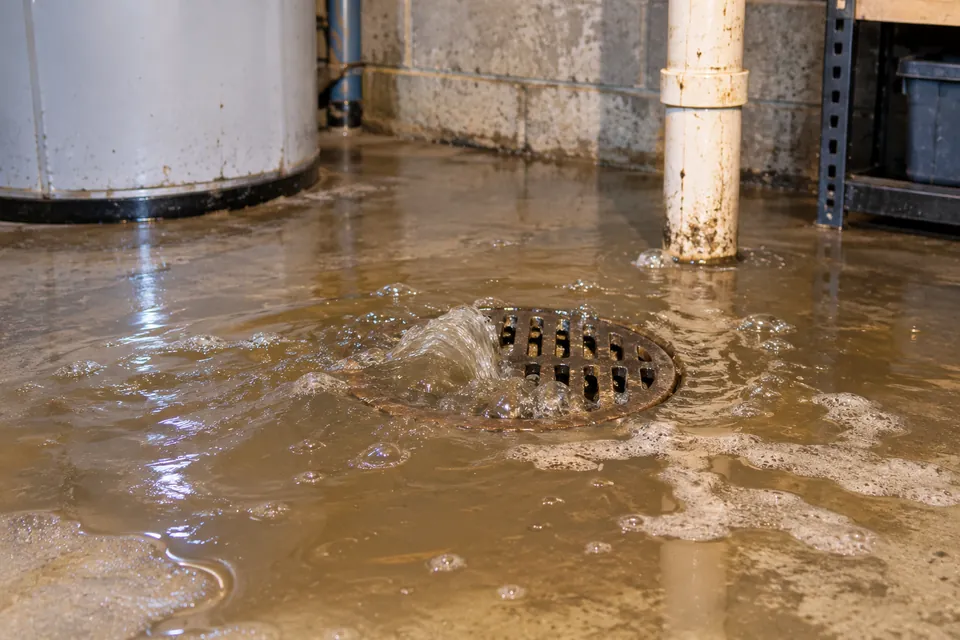
- Sewage is rising from a floor drain, or from more than one fixture.
- The backup returns each time water is used anywhere in the house.
- Drains have gurgled or run slow for weeks before this.
- Wastewater has reached carpet, drywall or stored belongings.
- A cleanout cap outside is seeping or the ground over the line is wet.
- Neighbors report the same problem at the same time.
Drain chemicals and rented machines are a poor idea with standing sewage. A plumber can run a camera down the line and tell you where the blockage is and whose pipe it sits in.
Who does what in Denver
You own the lateral. The City and County of Denver's utility locates page says the service line, or lateral, is the responsibility of the property owner up to and including the tap into the main sewer line, and that the city locates main sewer lines only. A blockage or break anywhere along that run, including under the street, is the owner's repair.
The city has the main. Denver Water's emergencies page lists the number for emergency sewage service from Denver's wastewater operation. Use it when the signs point to the public main, such as several homes backing up together. That number is for the City and County of Denver; in Aurora, Lakewood and other nearby cities, look on your sewer bill.
A licensed plumber clears and repairs your line. Colorado licenses plumbers through the State Plumbing Board, and you can search a name on the DORA license lookup. Ask for the camera findings in writing, with the distance to the blockage.
A water damage company cleans up. Sewage cleanup involves removing what cannot be disinfected and drying the rest. Fixr's national average range for water damage restoration is $1,200 to $5,000; Fixr puts black water (sewage) extraction at $7 to $7.50 per square foot, against $3.75 to $4.25 for clean water. This guide has no Denver price. See water damage: the first steps.
Your insurer may or may not pay. The Colorado Division of Insurance describes sewer backup as additional coverage you may need to purchase, so a standard policy is not something to count on. Check your declarations page for the endorsement. Questions about a claim can go to the division's consumer services line, 303-894-7490.
No verified Denver figures for the pipe. This guide has no checked Denver price for clearing or replacing a sewer lateral (national ranges are below), and no Denver permit rule to quote for that work. Community Planning and Development takes general permit questions at 720-865-2700, and the permits page has the office details.
What a repair usually costs
National ranges from cost publishers, not Denver quotes. The fault decides the price, so ask for it in writing before work starts.
When you call: 4 questions to ask
- Does a licensed plumber do the water heater work, as the State Plumbing Board requires?
- Is the city permit and inspection in the price?
- What's the trip charge, and does it count toward the repair?
- Would a heat pump water heater qualify for an Xcel Energy rebate in my home?
A fair written quote shows parts, labor, permit and inspection, removal of the old unit, and the warranty in writing. Check any contractor's license on the DORA license lookup before work starts.
What happens when you call
- You're connectedStraight to a local plumber that serves your area and takes calls like yours.
- You get a priceDescribe the problem, ask for a written quote and their license number. No obligation.
Want a price for your home? Call a local plumber for a written quote.
Phone line opening soonCommon questions
Who is responsible for a sewer backup in Denver, me or the city?
The City and County of Denver says the lateral is the property owner's responsibility up to and including the tap into the main sewer line. The City and County of Denver locates main sewer lines.
Who do I call for a sewer backup in Denver?
A plumber for your own line. If neighbors are backing up as well and the public main looks like the cause, Denver Water's emergencies page lists the number for the city's emergency sewage service.
Does homeowners insurance cover sewer backup in Colorado?
Not automatically. The Colorado Division of Insurance lists sewer backup as additional coverage you may need to buy.
Can I use the toilet during a sewer backup?
No. Hold off on all water use until the line is cleared, since anything sent down a drain can come back up at the lowest fixture.
Related guides
Sources
- City and County of Denver: Utility locates
- Denver Water: Emergencies
- Colorado DORA: License lookup
- Colorado State Plumbing Board (DORA): water heater installation bulletin, December 2025
- Colorado Division of Insurance: My homeowners insurance doesn't cover what?
- Colorado Division of Insurance: Before you schedule an appointment or file a complaint
- Fixr: Water damage restoration cost (national)
- Denver Community Planning and Development: Contact us
Costs are typical ranges. Your quote depends on your home. Rules and rebates change; check the original source before you rely on a figure. Something wrong? Tell us via the contact on the Impressum page.