Along the Northern Front Range, CSU's insect calendar says winged termites begin to emerge and swarm in January and February and keep swarming into early March. Colorado's termites are native subterranean species. CSU Extension notes that damage to buildings here has not been very common compared with wetter or warmer parts of the US.
Key facts
- Local swarms
- January and February, continuing into early March (CSU calendar)
- Type
- Native subterranean termites (Reticulitermes spp.)
- Most widespread
- Aridland subterranean termite, R. tibialis
- Typically linked to damage
- Eastern subterranean termite
- Strongest indoor sign
- Winged termites inside the house
- Inspection
- $150–$350, one-time visit (Fixr, national)
A winter swarm, not a spring one
Colorado State University's checklist for Weld, Larimer, Adams and Boulder Counties lists termites under January and February: winged reproductive stages begin to emerge and swarm. Under early March it says they continue to swarm in late winter. The calendar does not name the species.
CSU's statewide termite page gives a broader rule of thumb: winged termites are usually produced in great numbers in the spring or fall. The local calendar is the better guide for Fort Collins, and timing may shift from year to year.
Which termites these are
At least three native subterranean species (Reticulitermes spp.) live in Colorado and can be locally common, according to CSU Extension's PlantTalk. The aridland subterranean termite, R. tibialis, is the most widespread and may be found throughout most of the state below about 7500 ft. Fort Collins sits at approximately 5,000 feet. The eastern subterranean termite is typically linked to structural damage in Colorado. Drywood termites affect only a small area around Grand Junction.
Signs CSU points to
- Winged termites inside. CSU says that when they are seen indoors, an infestation is present.
- Loose wings. Termites break off their wings once a new colony forms, so piles of wings near a window or door matter.
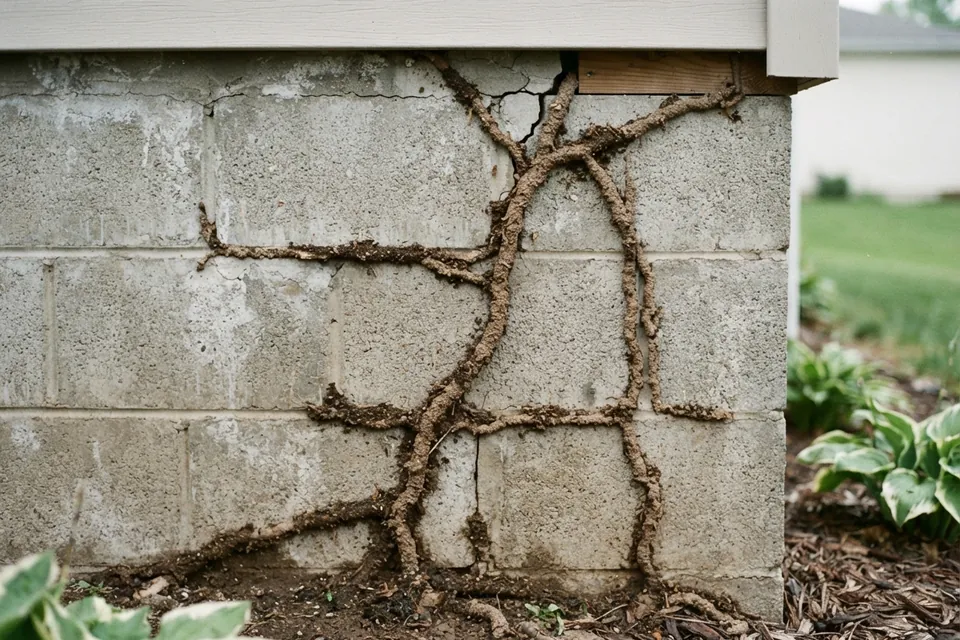
- Mud tubes. A tube with moisture inside is active. An old, inactive one is dry and crumbles easily.
- Where to look. Outside, check slabs, sill plates, joists, crawl spaces and wood piles. Inside, look in high-moisture areas for paint that cracks or blisters.
Moisture keeps coming up. If those damp areas trace back to a leak, the water damage guide covers what to do about it.
Want a price for your home? Call a local pest control company for a written quote.
Phone line opening soonBefore anyone treats
- Leave the mud tubes alone. An inspector needs to see them as they are.
- Save a sample. Put a few winged insects or shed wings in a sealed bag or jar. Note the date and the room.
- Get an inspection from a licensed company. Search the business first on CDA's Pesticide Applicator Search. We don't check companies for you.
- Don't try to treat termites yourself. That job belongs to a licensed company.
Prices and the paperwork Colorado requires are on the termite treatment cost page.
When you call: 4 questions to ask
- What business name is on your Colorado Department of Agriculture license, so I can search it?
- Is the price for one visit or a plan, and how often is a plan billed?
- Will you leave me a written notice naming each product used and the date?
- For termites, how many linear feet does the bid cover, and what does the warranty exclude?
A fair written quote shows the pests and areas covered, the method, one visit or a plan, the total price and any warranty terms. Check any contractor's license on the Colorado Department of Agriculture's Pesticide Applicator Search before work starts.
What happens when you call
- You're connectedStraight to a local pest control company that serves your area and takes calls like yours.
- You get a priceDescribe the problem, ask for a written quote and their license number. No obligation.
Common questions
When do termites swarm in Fort Collins?
CSU's Northern Front Range calendar says winged termites begin to emerge and swarm in January and February and continue into early March.
Which termite is most common here?
CSU Extension says the aridland subterranean termite is the most widespread in Colorado. It may be found throughout most of the state below about 7500 ft.
I found winged insects in the basement. Are they termites?
Save a few in a sealed bag and have a licensed company inspect. CSU says winged termites seen indoors indicate an infestation is present.
How do I tell if a mud tube is active?
CSU says moisture inside means the tube is active. Inactive tubes are dry and crumble easily. Leave them in place for the inspector.
Do termites cause much damage in Colorado?
CSU Extension says termite damage to structures in Colorado has not been very common compared with wetter or warmer parts of the US.
Related guides
Sources
- Colorado State University: Checklist of common insect related events, Northern Front Range (Weld, Larimer, Adams, Boulder)
- Colorado State University Agricultural Biology: Termites
- CSU Extension PlantTalk: Termites in Colorado
- Colorado Department of Agriculture: Pesticide applicator search
Costs are typical ranges. Your quote depends on your home. Rules and rebates change; check the original source before you rely on a figure. Something wrong? Tell us via the contact on the Impressum page.