Stop running water anywhere in the house: no flushing, no taps, no washer. Everything you send down adds to what's coming up. Keep people and pets away from the sewage and call a plumber. In Nashville the property owner is responsible for the sewer line from the building to the public main. If sewage is surfacing in the street, call Metro Water Services on 615-862-4600, option 3.
Key facts
- Step one
- No water down any drain
- Health
- Treat sewage as contaminated; keep children and pets out
- Your part of the line
- Building to the public sewer main (Metro Water brochure, 2015)
- Street or manhole overflow
- Metro Water Services, 615-862-4600, option 3
- Cleanup
- $1,200–$5,000 (Fixr's national average range, water damage restoration)
- Flood policy
- No cover for a backup not caused directly by flooding (TDCI)
Short version: stop adding water, stay out of the mess, get a plumber to clear the line, and ask Metro Water only about the public side.
What you can check
- Stop using water. Tell everyone at home. Pause the dishwasher and washing machine mid-cycle if they're running, and don't flush to "test" it.
- Close off the area. Shut the door or block the stairs. Sewage carries bacteria, so nobody should walk through it in ordinary shoes, and anything porous it soaks is likely headed for the bin.
Water use stopped and the area closed off? Call a local plumber now, then carry on down the list.
Phone line opening soonHave this ready when you call
- Your address
- Where the water is and whether the main is off
- When it started
- Mind the electricity. Don't wade toward outlets, a freezer or a sump pump cord. Switching off the breakers for that area is fine only when you can reach the breaker box without crossing wet floor.
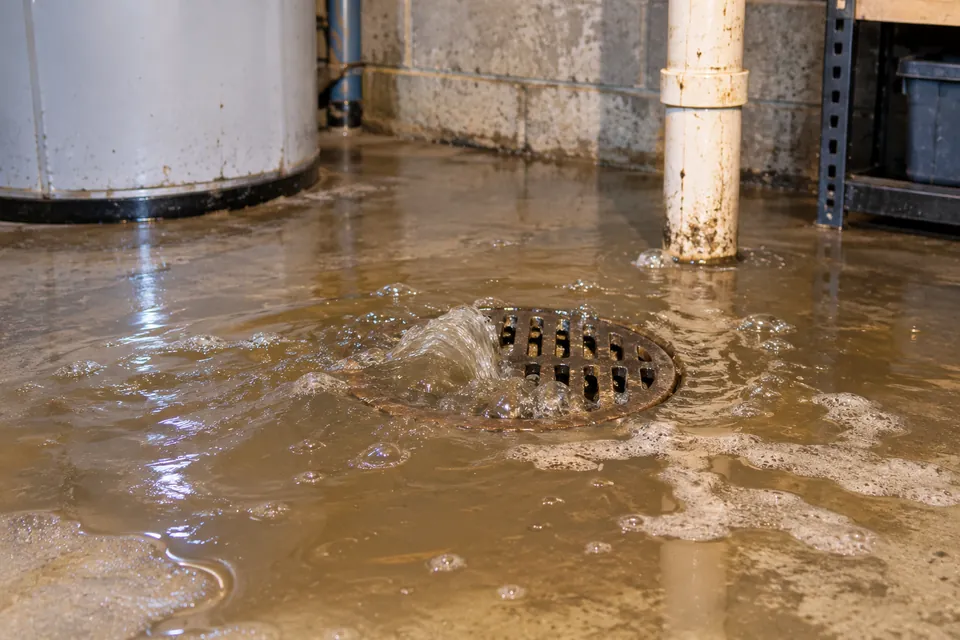
- Work out the pattern. One slow sink is a local clog. Water rising in a tub or floor drain when a toilet flushes, or several low fixtures gurgling together, points to the main line leaving the house.
- Look outside. From a distance, see whether a manhole in the street is overflowing or neighbours have the same trouble. Either suggests the public main rather than your line.
- Photograph and ventilate. Take pictures before cleanup, open windows, and keep the heating or cooling fan off so it doesn't pull air from the affected room through the house.
What not to touch
Leave cleanout caps in place; one that's holding back a full pipe can release it at you. Skip chemical drain openers, which sit in the standing water and make it hazardous for whoever snakes the line. Don't run a rented drain machine into a main line, and don't lift manhole covers.
Stop and call a pro when:
- sewage is coming up through a floor drain, tub or shower;
- more than one fixture is backing up;
- it returns after a plunger cleared it;
- water has reached drywall, carpet or a finished basement;
- you see a wet, sunken or foul-smelling patch in the yard along the line.
The Nashville part
Metro Water Services and the line split. A Metro Water brochure dated 2015 says the property owner owns and is responsible for the sewer service line from the building to the public sewer main. That includes the stretch under your yard. The brochure also cites Metro Ordinance 15.40.050(B): where an owner makes a good-faith effort and provides excavated access at the boundary, the department makes necessary repairs on the portion inside the public right-of-way. Because the brochure is an older document, ask Metro Water how it applies before a contractor digs.
When to phone Metro Water. Use 615-862-4600, option 3 if a manhole is overflowing or you believe the public main is blocked. For a blockage in your own line, the call is to a plumber.
Insurance. Tennessee's Department of Commerce and Insurance, writing about flood insurance, says that if a sewer backup is not caused directly by flooding, the damage is not covered by that policy. The guide has no Tennessee fact on backup coverage under a regular homeowners policy, so ask your agent what yours says. Consumer Insurance Services takes questions and complaints on (615) 741-2218 or (800) 342-4029.
Metro Codes. The state notes that a local permit is required regardless of a plumbing project's amount in order to obtain inspections. What Metro requires for a sewer line repair isn't a fact this guide holds; Metro Codes and Building Safety can tell you on 615-862-6500.
License. Tennessee issues a Limited Licensed Plumber (LLP) license for plumbing projects that total less than $25,000 with materials and labor, and a contractor license (CMC or CMC-A) from $25,000. The state adds that the LLP isn't accepted in places with their own licensing and inspections, and Metro Nashville runs a plumbing exam of its own. So ask for the plumber's Metro license; state licenses can be looked up on Tennessee's license search.
Cost. The guide has no Nashville figure for clearing or replacing a sewer line; the table below gives national ranges. For the cleanup indoors, Fixr's national average range for water damage restoration is $1,200 to $5,000; sewage jobs sit in a different price band from clean water, so get the scope in writing.
What a repair usually costs
National ranges from cost publishers, not Nashville quotes. The fault decides the price, so ask for it in writing before work starts.
When you call: 4 questions to ask
- Is this a like-for-like swap, or does the fuel type change and need a permit?
- Would a heat pump water heater get the $900 TVA EnergyRight rebate?
- Which plumbing license covers a job this size?
- Is the service-call fee credited on the repair?
A fair written quote shows the heater, labor, any permit, haul-away of the old tank and the written warranty. Check any contractor's license on the Tennessee license search before work starts.
What happens when you call
- You're connectedStraight to a local plumber that serves your area and takes calls like yours.
- You get a priceDescribe the problem, ask for a written quote and their license number. No obligation.
Want a price for your home? Call a local plumber for a written quote.
Phone line opening soonCommon questions
Who is responsible for a sewer backup in Nashville, me or the city?
A 2015 Metro Water Services brochure says the property owner is responsible for the sewer service line from the building to the public sewer main. Problems in the public main itself belong to Metro Water.
Who do I call for a sewer backup in Nashville?
A plumber for a blockage in your line. Metro Water Services at 615-862-4600, option 3 if sewage is overflowing in the street or you suspect the public main.
Does insurance cover a sewer backup in Tennessee?
The state insurance department says flood insurance does not cover a sewer backup unless flooding directly caused it. For a homeowners policy, the guide has no rule to cite; check with your insurer.
Can I clean up a sewage backup myself?
A small spill on a hard floor, yes, with gloves, boots and disinfectant. Sewage in carpet, drywall or a large area is a job for a water damage company.
Related guides
Sources
- Metro Water Services: Sewer service line policy brochure (2015)
- Metro Water Services: Customer information and emergency line
- Tennessee Department of Commerce and Insurance: Flood insurance information
- Tennessee Department of Commerce and Insurance: Insurance Division contact
- Tennessee Department of Commerce and Insurance: Who needs a Limited Licensed Plumber (LLP) license
- Metro Codes and Building Safety: Contact information
- Tennessee Department of Commerce and Insurance: License search
- Fixr: Water damage restoration cost (national)
Costs are typical ranges. Your quote depends on your home. Rules and rebates change; check the original source before you rely on a figure. Something wrong? Tell us via the contact on the Impressum page.