USU Extension says the subterranean termite is the most common termite in Utah, and that termites are most common in the state's southern counties. Most homeowners first spot winged swarmers in the spring, or mud tubes along the foundation. Leave the tubes intact and call a UDAF-licensed company for an inspection.
Key facts
- Main type in Utah
- Subterranean termite (USU Extension)
- Where most common
- Southern Utah counties (USU)
- When swarmers appear
- Spring (USU)
- Telltale sign
- Mud tubes bridging gaps to wood
- Who licenses treatment
- UDAF
Which termites live in Utah
USU Extension says all three kinds of termites, subterranean, drywood and dampwood, can be found in Utah. The subterranean termite is the most common. USU also says termites occur throughout the state but are most common in the southern counties. Provo is not in that part of the state, and none of our sources names Utah County, so don't read this as a sign Provo houses are at high risk. It does mean you shouldn't rule termites out.
When you'll notice them
USU's fact sheet makes a useful point: homeowners don't usually notice the feeding damage. What they do see is winged swarmers in the spring. USU gives no month, and we won't guess one for Provo.
Signs USU tells you to look for
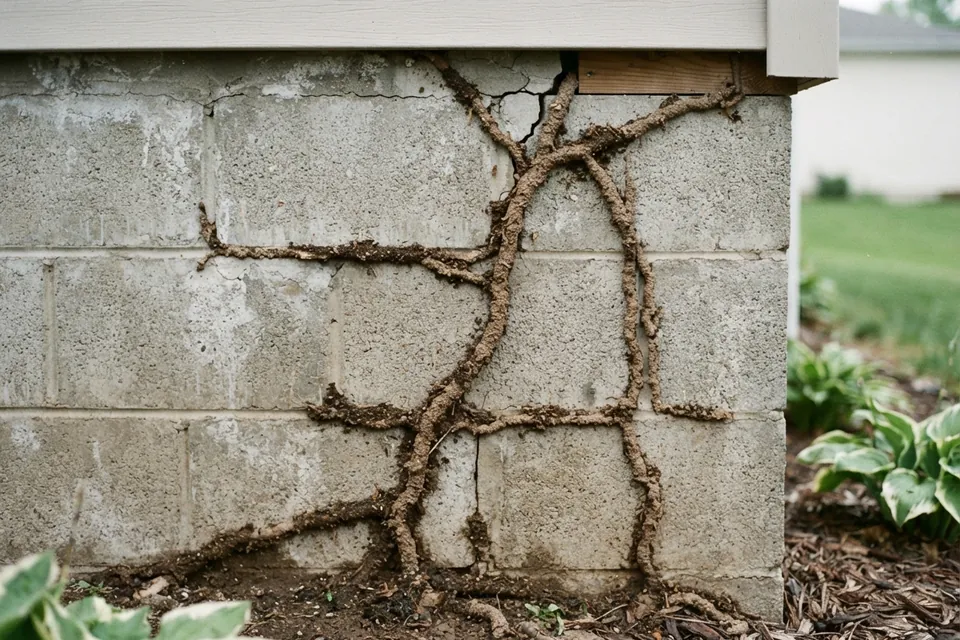
- Mud tubes. Also called shelter tubes, they bridge gaps where the soil doesn't touch wood directly. Tubes in and around a house point to subterranean termites.
- Frass. Termite droppings on or near wood.
- Swarmers. Winged termites showing up in spring.
- Cracked wood or blistered paint. Feeding sometimes causes either one.
USU recommends regular inspections and says thorough termite inspections and treatments should be done by licensed professionals.
Want a price for your home? Call a local pest control company for a written quote.
Phone line opening soonYour first moves
- Leave the tubes alone. Don't break or scrape mud tubes. An inspector needs to see them as they are.
- Save a swarmer. If winged insects appear, collect a few in a sealed bag or jar so an inspector can identify them. Ants swarm too.
- Take photos. Note where you saw the tubes, frass or damaged wood.
- Book a licensed inspection. Look the company up on the UDAF public license lookup first. Don't try to treat termites yourself.
Termite work is a pesticide application, so the company needs a UDAF business license and a licensed applicator on staff or as owner. Costs and contract rules are on the termite treatment cost page.
When you call: 4 questions to ask
- What business name and license number will I find for you on UDAF's license lookup?
- Is a fully licensed applicator doing the work at my house?
- Will my proposal show your business name and license number, as Utah's rule requires?
- Is this a single visit or a plan, and how is the plan billed?
A fair written quote shows the pests and areas covered, the method, single visit or plan, the total price, your license number and any warranty terms. Check any contractor's license on the Utah Department of Agriculture and Food license lookup before work starts.
What happens when you call
- You're connectedStraight to a local pest control company that serves your area and takes calls like yours.
- You get a priceDescribe the problem, ask for a written quote and their license number. No obligation.
Common questions
Are there termites in Provo?
USU Extension says termites occur throughout Utah but are most common in the southern counties. Our sources don't name Utah County, so the local risk isn't measured.
What kind of termite is most common in Utah?
The subterranean termite, according to USU Extension. Drywood and dampwood termites can also be found in the state.
When do termites swarm in Utah?
USU says homeowners see winged swarmers in the spring. It gives no specific month.
What do termite mud tubes look like?
USU describes them as shelter tubes that bridge gaps where wood isn't in direct contact with soil. Leave them for the inspector.
Can I treat termites myself?
USU says thorough termite inspections and treatments should be done by licensed professionals. Check the company on the UDAF public license lookup.
Related guides
Sources
- USU Extension fact sheet: Subterranean Termites (ENT-08-08, May 2008)
- USU Extension, Utah Pests news: Termites (2021)
- Utah Department of Agriculture and Food: Commercial Pesticide Business License
- Utah Department of Agriculture and Food: Online services and license lookup
- Utah Poison Control Center
Costs are typical ranges. Your quote depends on your home. Rules and rebates change; check the original source before you rely on a figure. Something wrong? Tell us via the contact on the Impressum page.