USU Extension says all three kinds of termites can be found in Utah, but the subterranean termite Reticulitermes hesperus is the most common. Termites occur throughout the state and are most common in the southern counties. Homeowners usually notice the winged swarmers in the spring rather than the feeding damage.
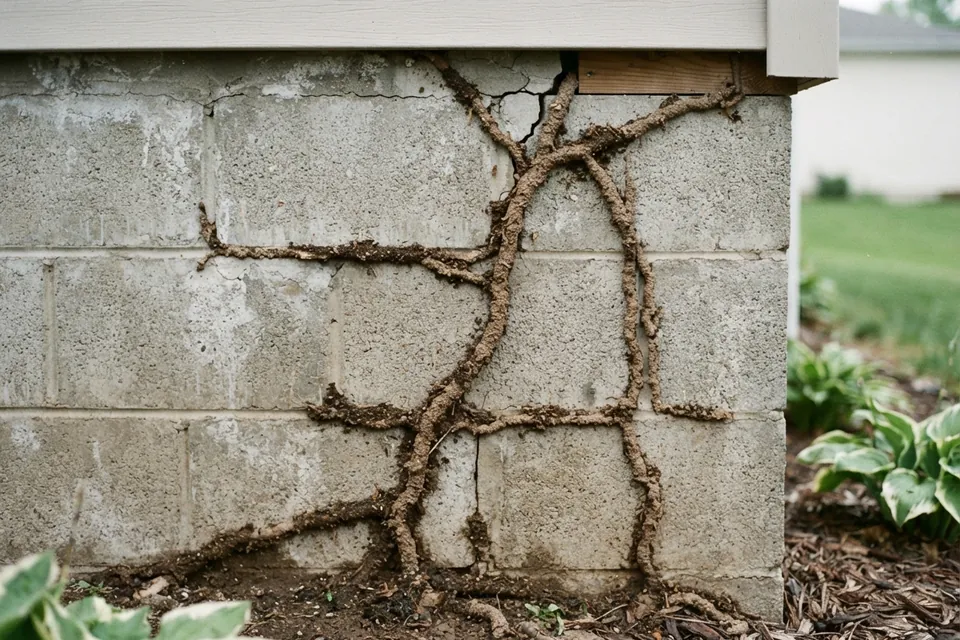
Key facts
- Most common species
- Subterranean termite, Reticulitermes hesperus (USU)
- Where in Utah
- Throughout the state; most common in the southern counties
- When you see them
- Winged swarmers in the spring
- Signs
- Mud tubes, frass (droppings), swarmers; cracked wood or blistered paint
- Who treats
- Licensed professionals, says USU
- License check
- UDAF public license look-up
Termites in northern Utah
USU Extension's fact sheet on subterranean termites says subterranean, drywood and dampwood termites can all be found in Utah. The subterranean termite Reticulitermes hesperus is the one you're most likely to meet. USU also says termites are most common in the southern counties, and Salt Lake County isn't one of them. So a few winged insects in your basement aren't proof of a termite problem. They're a reason to look closer.
When swarmers show up
USU says homeowners don't generally notice termite feeding damage, but they do see winged swarmers in the spring. Swarmers are the colony's flying adults. Seeing them indoors is the moment most Utah homeowners first learn they may have termites.
Signs to check for
USU tells homeowners to look over the outside of the house for termite activity. Watch for:
- Mud tubes. A 2021 USU Extension article says mud tubes in and around the house indicate subterranean termites.
- Frass. Termite droppings.
- Swarmers. Winged termites, inside or near the house.
- Damage. USU says feeding can sometimes make wood crack or paint blister.
Want a price for your home? Call a local pest control company for a written quote.
Phone line opening soonWhat to do first
- Leave mud tubes alone. Don't break them open or spray them. An inspector wants to see them as they are.
- Save a sample. Put a few swarmers in a sealed bag or jar so the inspector can identify them.
- Take photos. Note where you found the tubes, insects or damage.
- Book an inspection. USU says thorough termite inspections and treatments should be completed by licensed professionals. Don't try to treat termites yourself.
- Check the license. Look up the company on the UDAF public license look-up. Its license number must appear on its contracts and service vehicles under Utah rule R68-7-16.
Prices and contract paperwork are on the termite treatment cost page.
When you call: 4 questions to ask
- What is your UDAF Commercial Pesticide Business License number?
- Is a fully licensed applicator doing the work at my house?
- Is this one visit or a plan, and how is the plan billed?
- Will my contract and service record show your business name and license number?
A fair written quote shows the pests and areas treated, one visit or a plan, the total price, the business name and UDAF license number, and any warranty terms. Check any contractor's license on the Utah Department of Agriculture and Food license lookup before work starts.
What happens when you call
- You're connectedStraight to a local pest control company that serves your area and takes calls like yours.
- You get a priceDescribe the problem, ask for a written quote and their license number. No obligation.
Common questions
Are there termites in Salt Lake City?
USU Extension says termites can be found throughout Utah but are most common in the southern counties. The most common species in the state is the subterranean termite, Reticulitermes hesperus.
When do termites swarm in Utah?
USU says homeowners see the winged swarmers in the spring. It doesn't give exact months.
What are the signs of termites?
USU lists mud tubes, frass (droppings) and swarmers, and says feeding can sometimes crack wood or blister paint.
Should I treat termites myself?
No. USU says thorough termite inspections and treatments should be done by licensed professionals. Check the company on UDAF's license look-up first.
Related guides
Sources
- USU Extension fact sheet: Subterranean Termites (2008)
- USU Extension: Termites (2021)
- Utah Department of Agriculture and Food: Online services (license look-up)
- Utah Administrative Code R68-7-16, via Cornell Legal Information Institute
Costs are typical ranges. Your quote depends on your home. Rules and rebates change; check the original source before you rely on a figure. Something wrong? Tell us via the contact on the Impressum page.