Shut off the water at the main valve, keep away from electrical outlets and cords in wet areas, and turn off power to those rooms only if you can reach the breaker from a dry spot. Photograph everything, move belongings out, and start removing water. Call a water damage company if it's more than a small spill, if water got into walls or ceilings, or if it's sewage.
Key facts
- 1. Stop the water
- Main shutoff, or the valve behind the appliance
- 2. Power
- Breaker off for wet rooms, only from a dry spot
- 3. Document
- Photos and video before moving anything; keep damaged items
- 4. Protect
- Move furniture, rugs, electronics; foil under furniture legs
- 5. Dry
- Within 24–48 hours (EPA); fans, dehumidifier, open cabinets
- 6. Call
- Plumber to fix the source; restoration crew for drying; insurer
The checklist
- Stop the water. Close the main water shutoff (usually where the line enters the basement or crawlspace). For a single appliance, close its supply valve. For a water heater, close the cold inlet valve on top and turn off its gas or breaker.
Water stopped? Call a local water damage crew now, then keep going with the steps while you wait.
Phone line opening soonHave this ready when you call
- Your address
- Where the water came from and whether it has stopped
- How long things have been wet
- Make it electrically safe. Turn off breakers for the wet area if you can reach the panel from a dry spot. Unplug nothing while standing in water.
- Document it. Take wide and close-up photos and video of the water, the source, and every damaged item before you move things. Keep damaged materials until the adjuster says otherwise.
- Get belongings out. Move furniture, rugs, electronics and papers to a dry room. Put foil or plastic under furniture legs you can't move.
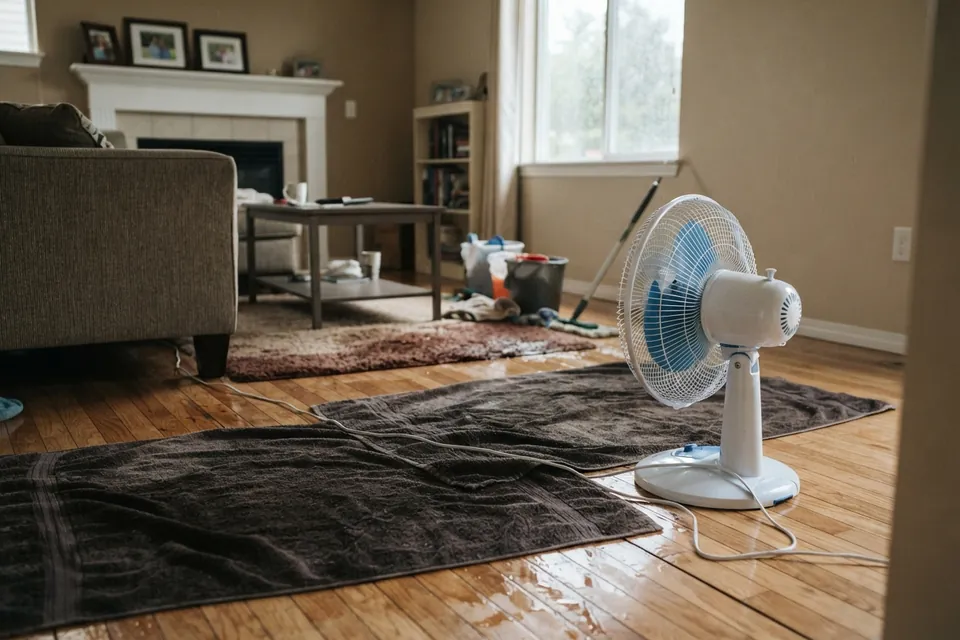
- Remove water. Mop, wet-vac, and towel. Open cabinet doors. Run fans and a dehumidifier. In Colorado Springs' dry air, opening windows helps if it's not freezing outside.
- Call the right people. A plumber to fix the source; a water damage restoration company if water reached walls, ceilings, subfloors or carpet pad; and your insurance company to open a claim.
When it's more than DIY
- Water soaked into drywall, insulation, carpet pad, subfloor or a ceiling.
- More than one room, or water that sat for more than a day.
- Gray or black water (appliance discharge, toilet, sewage).
- You can't get things dry within 24–48 hours.
Restoration crews use moisture meters to find water you can't see, remove what can't be dried, and leave commercial dehumidifiers and air movers for several days. Ask for daily moisture readings in writing; insurers want them.
Don'ts
- Don't use a household vacuum on water.
- Don't turn on ceiling fixtures in a wet ceiling.
- Don't wait for the adjuster to start drying; insurers generally expect you to prevent further damage.
- Don't paint or caulk over damp or moldy surfaces.
Next: file the insurance claim and read what restoration costs.
When you call: 4 questions to ask
- Will you take moisture readings every day and give me a written drying log?
- Do you bill my insurer directly, and what will I owe up front?
- Is the rebuild (drywall, flooring, paint) included, or is that another company?
- Are your technicians IICRC-certified?
A fair written quote shows extraction, materials removed, antimicrobial treatment, equipment days itemized, and photos for your claim. Check any contractor's license on pprbd.org before work starts.
What happens when you call
- You're connectedStraight to a local water damage crew that serves your area and takes calls like yours.
- You get a priceDescribe the problem, ask for a written quote and their license number. No obligation.
Want a price for your home? Call a local water damage crew for a written quote.
Phone line opening soonCommon questions
Should I wait for the insurance adjuster before cleaning up?
No. Document the damage with photos and video, then take reasonable steps to stop further damage and start drying. Keep receipts and the damaged materials.
Can I dry water damage myself?
Small clean-water spills on hard floors, yes. If water got into walls, ceilings, subfloor or carpet pad, or it's dirty water, professional drying is usually needed to prevent mold.
Who do I call first, a plumber or a water damage company?
Stop the water yourself first. Then call a plumber to fix the source and a restoration company to start drying; many restoration companies can do both or coordinate.
Related guides
Sources
- U.S. EPA: A Brief Guide to Mold, Moisture and Your Home
- U.S. EPA: Responding to water damage within 24–48 hours (Table 1)
- Colorado Division of Insurance: Insurance tips on burst pipe claims
Costs are typical ranges. Your quote depends on your home. Rules and rebates change; check the original source before you rely on a figure. Something wrong? Tell us via the contact on the Impressum page.