Most Colorado Springs homes heat with a natural gas furnace and cool with central AC or a swamp cooler. Fixr lists $3,800–$10,000 nationally as the average installed cost of a natural gas furnace in 2026, Colorado Springs Utilities pays its natural gas customers $900 toward a qualifying condensing furnace and $1,500–$3,000 toward a heat pump, and the federal tax credit is gone. At about 6,000 feet, equipment must also be set up for altitude.
Key facts
- Typical furnace replacement
- $3,800–$10,000 installed for natural gas (national 2026 range)
- Colorado Springs prices
- About 10–20% above national; full system replacement (gas furnace + central AC) $6,800–$14,500 before rebates (HVAC Project Cost)
- CSU furnace rebate
- $900 for a natural gas condensing furnace
- CSU heat pump rebate
- $1,500 (ENERGY STAR, or cold-climate under 3 tons); $3,000 cold-climate 3 tons and over
- Extra 2026 CSU credit
- $1,500 electric bill credit for approved heat pumps under 3 tons
- Federal 25C credit
- Ended for equipment placed in service after Dec 31, 2025
- Permit
- Mechanical permit through Pikes Peak Regional Building Department (PPRBD)
- Gas leak
- Leave the house, then call 911 and Colorado Springs Utilities at 719-448-4800
Call now if…
- You smell gas: leave first, then call 911 and Colorado Springs Utilities at 719-448-4800
- Your carbon monoxide alarm sounds: get out and call 911
- No heat with temperatures heading below freezing
- The furnace runs but blows cold air, or shuts off within seconds, again and again
Got a quote? Check it before you sign
Typical prices, what the technician should be able to show you, and which add-ons to question. All 15 repairs.
How your heating and cooling system works, and where it fails
- 1ThermostatSet it to Heat, a few degrees above room temperature. A blank or dim screen often just means dead batteries. Furnace not working →
- 2Furnace and filterMost homes here heat with a natural gas furnace. A clogged filter can make it overheat and shut itself off, and at about 6,000 feet the furnace must be set up for altitude. High-altitude sizing →
- 3Vent pipesHigh-efficiency furnaces vent through two white PVC pipes on an outside wall or the roof. After snow or a hard freeze, clear the ends. Safe checks →
- 4Outdoor unitCentral AC or a heat pump sits outside. Colorado Springs Utilities pays $1,500–$3,000 toward a qualifying heat pump in 2026. Heat pumps →
- 5Carbon monoxide alarmIf it sounds, get out, then call 911 and Colorado Springs Utilities at 719-448-4800. If you smell gas, leave first, then call 911 and Colorado Springs Utilities at 719-448-4800. Emergency steps →
Start here
What makes heating here different
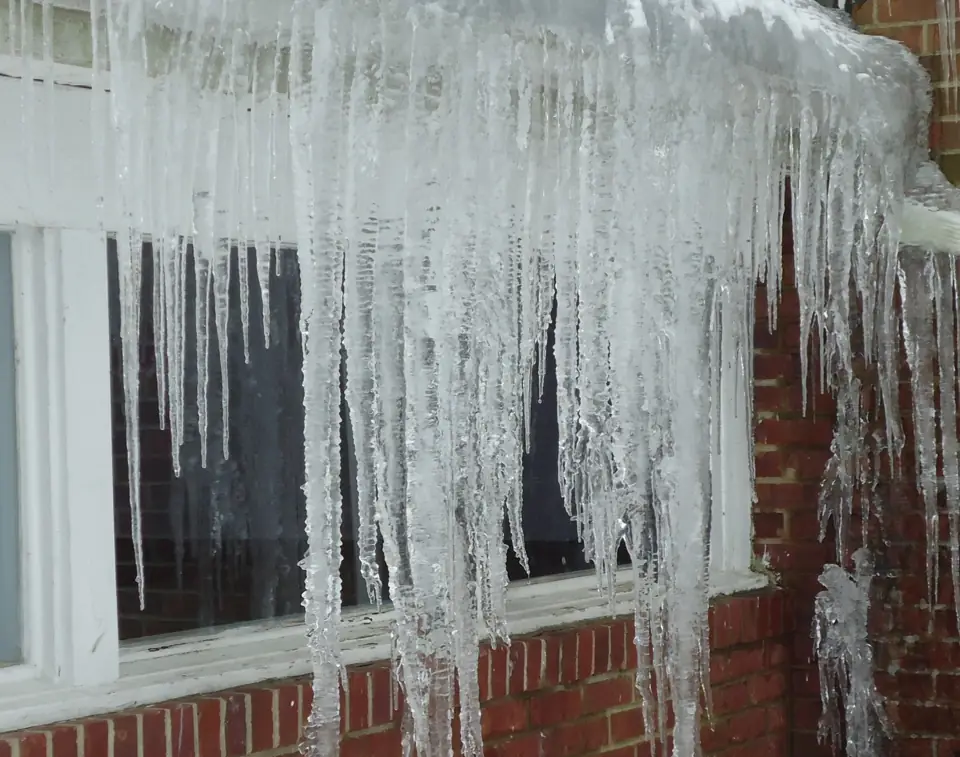
Cold comes in snaps. December and January are the coldest months, with normal January lows around 18 °F, but Arctic outbreaks push far below that. January 2025 averaged lows of 12.6 °F and tied as the 10th-coldest January on record. A furnace that limps along through a mild winter often fails on the first single-digit night, which is when every HVAC company in town is busiest.
Altitude. Gas furnaces are rated at sea level. Many furnaces must be derated, commonly 4% per 1,000 feet of elevation when installed above 2,000 feet (ACHR News); the model's manual sets the rule, and orifice changes depend on the model and elevation. At Colorado Springs' elevation that can cut a furnace's real output by 12–24% depending on the model. See high-altitude sizing.
Dry air. The same dry climate that makes swamp coolers work also makes humidifiers common on furnaces here, and those need their own maintenance.
One utility for most of the city. Colorado Springs Utilities (CSU) supplies gas and electricity to most city homes and runs its own rebate program, separate from Xcel Energy's programs elsewhere on the Front Range. If your power comes from Mountain View Electric Association (much of eastern El Paso County), check its rebates instead.
Want a price for your home? Call a local heating & cooling pro for a written quote.
Phone line opening soonRepair or replace?
A common rule of thumb: if a furnace is past about 15 years old and the repair quote is a large share of the cost of a new one, replacement usually makes more sense. A cracked heat exchanger on an older furnace is almost always a replacement, because it can leak carbon monoxide. A failed igniter, flame sensor or inducer motor on a 10-year-old furnace is usually a repair.
Permits and licensing
In Colorado Springs, El Paso County and the surrounding towns, permits come from the Pikes Peak Regional Building Department (PPRBD), not the city. Replacing a furnace, air conditioner or heat pump is mechanical work that PPRBD permits and inspects, and mechanical contractors register with PPRBD. Ask your contractor to pull the permit and to show you their PPRBD license; the inspection is your free second opinion on the install. More on the permits page.
When you call: 4 questions to ask
- Is the diagnostic or trip fee credited toward the repair?
- Will you size a new system with a load calculation and set it up for our altitude?
- Is the PPRBD mechanical permit included, and what's your PPRBD license number?
- Does this model qualify for the Colorado Springs Utilities rebate, and who files it?
A fair written quote shows model numbers and efficiency, altitude setup, the permit and inspection, removal of the old unit, and parts and labor warranty. Check any contractor's license on pprbd.org before work starts.
What happens when you call
- You're connectedStraight to a local heating & cooling pro that serves your area and takes calls like yours.
- You get a priceDescribe the problem, ask for a written quote and their license number. No obligation.
Common questions
Is there still a federal tax credit for a new furnace or heat pump?
No. The federal Energy Efficient Home Improvement Credit (25C) ended for equipment placed in service after December 31, 2025. Colorado Springs Utilities rebates and the Colorado heat pump tax credit still apply in 2026.
Who do I call if I smell gas?
Leave the house without switching anything on or off, then call 911 and Colorado Springs Utilities at 719-448-4800 from outside. Don't call an HVAC company first.
Do I need a permit to replace my furnace?
Yes. Furnace, AC and heat pump replacements are mechanical work permitted and inspected by Pikes Peak Regional Building Department. Your contractor normally pulls the permit and includes the fee in the quote.
Related guides
Sources
- Colorado Springs Utilities: Residential rebate application, version 1.2026
- Colorado Springs Utilities: HVAC & heat pump rebates
- Fixr: How much does a new furnace cost? (2026 data)
- HVAC Project Cost: Colorado Springs HVAC replacement cost (2026 guide)
- ConsumerAffairs: HVAC companies in Colorado Springs: 2026 repair and replacement costs
- IRS: Instructions for Form 5695 (no energy efficient home improvement credit for property placed in service after Dec 31, 2025)
- ACHR News: Furnaces must be modified for high-altitude applications
- National Weather Service Pueblo: Colorado Springs January normals
- National Weather Service Pueblo: January 2025 review (10th-coldest January on record)
- Colorado Springs Utilities: Natural gas incident response (emergency line 719-448-4800)
- Pikes Peak Regional Building Department: Homeowner permits: what needs a permit, homeowner rules, licensed contractors
Costs are typical ranges. Your quote depends on your home. Rules and rebates change; check the original source before you rely on a figure. Something wrong? Tell us via the contact on the Impressum page.