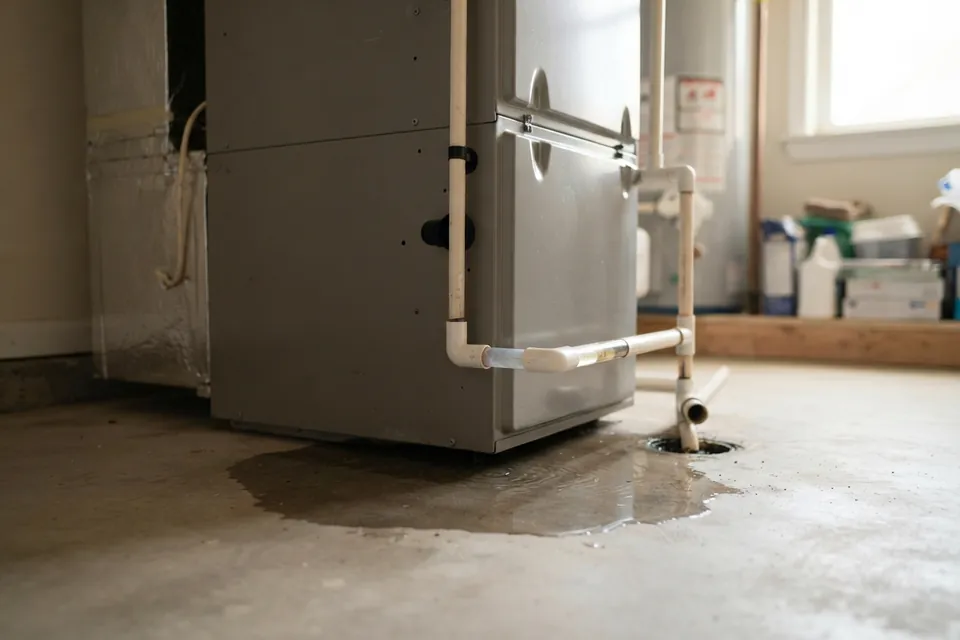
Turn the cooling off at the thermostat so the unit stops making water, then soak up what has collected. Check the filter, look in the drain pan, and see whether the drain pipe outside is dripping. A puddle that comes back, a full pan or a wet ceiling under an attic unit needs an AC technician. Texas home policies treat a sudden leak and a slow one very differently.
Key facts
- First move
- Thermostat to Off; towels under the unit
- Filter
- A matted filter can ice the coil, which then drips
- Drain pan
- Standing water means the drain isn't carrying it away
- Outside drain pipe
- Should drip steadily while the AC runs
- License to ask for
- Texas ACR contractor license (TDLR)
- Insurance
- Sudden, accidental water release is covered; a continuous leak is not (TDI)
- Cleanup if it spread
- $1,200–$5,000 (national, Fixr)
Why an air conditioner makes water at all
Cooling air wrings moisture out of it. That moisture runs off the indoor coil into a pan and leaves through a small drain pipe. Water on the floor or the ceiling means something along that path has stopped working: the coil froze, the pan filled, or the pipe is blocked.
Safe first checks
- Switch cooling off. Set the thermostat to Off. No cooling, no new condensation.
- Protect what is underneath. Mop the floor, set a bucket or towels in place, and move boxes, rugs and electronics out of the wet area. Keep clear of any outlet or cord that got wet.
- Inspect the filter. A filter packed with dust starves the coil of air, the coil ices over, and the melt overflows. Fit a clean one.
- Look at the pan without taking anything apart. Many indoor units, especially in attics, sit over a shallow metal or plastic tray. Water standing in it tells you the main drain is not doing its job.
- Find the drain outlet outdoors. It is usually a short plastic pipe near the outdoor unit or low on an outside wall. Dry while the AC has been running points to a blockage further up.
- Look up. With the unit in the attic, scan the ceiling below for a new stain, a soft spot or a bulge.
Want a price for your home? Call a local heating & cooling pro for a written quote.
Phone line opening soonStop and call a pro when
- The pan is full, or the puddle is back within a day of restarting.
- You can see ice on the coil cabinet or the refrigerant line.
- A ceiling is stained, sagging or dripping.
- The system shut itself down and will not come back on.
- Water reached an outlet, the breaker panel or the unit's own wiring.
Clearing a drain from inside the air handler, replacing a pan and anything to do with refrigerant belong to a technician. Leave the cabinet panels on.
Houston's long cooling season
With a normal July high of 94.5 °F at Bush Intercontinental and extreme heat rated High in the City's hazard plan, air conditioners here run for hours at a stretch across many months. More running time means more condensate through the same small drain, so a partial clog that would go unnoticed elsewhere shows up as a leak.
Who does the repair
Texas requires an ACR contractor license from the Texas Department of Licensing and Regulation for anyone offering air conditioning work; the TDLR License Data Search shows whether a company holds one. On permits, the City of Houston's storm repair guide exempts only thermostat and grill replacement and says other mechanical work needs a permit, and its condensing-unit page requires one for repairs to the outdoor unit. Ask the company whether clearing your drain line needs a City permit.
Leak damage and your policy
The Texas Department of Insurance guide to homeowners coverage separates two cases. A sudden and accidental release of water is covered. A continuous leak is not, and policies will not pay for mold removal that follows one. A drip that has been staining a ceiling for weeks falls on the wrong side of that line, which is a good reason to act on the first sign. If drywall, insulation or flooring is wet, the water damage steps apply; Fixr's national range for restoration is $1,200 to $5,000.
What a repair usually costs
National ranges from cost publishers, not Houston quotes. The fault decides the price, so ask for it in writing before work starts.
When you call: 4 questions to ask
- Does the Houston Permitting Center permit for the condensing unit come with this price?
- Is the new system at least 15.2 SEER2, and are you a CenterPoint participating contractor for the incentive?
- What's your TDLR air conditioning and refrigeration license number?
- How did you size the unit for this house and our humidity?
A fair written quote shows the equipment and its SEER2 rating, the permit, any CenterPoint incentive taken off the invoice, haul-away and labor warranty. Check any contractor's license on the TDLR license search before work starts.
What happens when you call
- You're connectedStraight to a local heating & cooling pro that serves your area and takes calls like yours.
- You get a priceDescribe the problem, ask for a written quote and their license number. No obligation.
Common questions
Is water leaking from my AC dangerous?
The water itself is condensation, but it can reach wiring, soak a ceiling until it gives way, and feed mold. Turn the cooling off and keep away from wet outlets or cords.
Can I keep running the AC while it leaks?
It is better not to. Each hour of cooling adds more water to a drain that is already failing. If you need relief from the heat, deal with the leak first or spend the time somewhere cooler.
Will homeowners insurance pay for AC leak damage in Texas?
TDI says a sudden and accidental release of water is covered, while a continuous leak is not. Check your own policy and call your insurer early.
Who fixes a leaking AC?
An air conditioning company. In Texas it should hold an ACR contractor license from TDLR. If water damaged ceilings or floors, a water damage company handles the drying.
Related guides
Sources
- National Weather Service: Houston Bush Intercontinental (IAH) normals, July (1991-2020)
- City of Houston Office of Emergency Management: Hazard Mitigation Plan Update (2023-2028)
- Texas Department of Licensing and Regulation: Air Conditioning and Refrigeration at a glance
- TDLR License Data Search
- Houston Permitting Center: Condensing unit permit
- Houston Permitting Center: Storm damage repair permit guide (rev. May 2024)
- Texas Department of Insurance: Homeowners insurance guide
- Fixr: Water damage restoration cost (national)
Costs are typical ranges. Your quote depends on your home. Rules and rebates change; check the original source before you rely on a figure. Something wrong? Tell us via the contact on the Impressum page.