A split pipe means closing the main shutoff first. A frozen pipe that hasn't split needs its tap opened and slow, flame-free heat. The normal January low is 41 °F, but NWS normals still average about 5 January nights at 32 °F or colder. For a break at the meter or in the street, call SAWS at 210-704-7297, press 1.
Key facts
- Split pipe
- Close the main shutoff
- Frozen, not split
- Open the tap, slow heat, no flame
- Break at the meter or street
- SAWS, 210-704-7297, press 1
- Meter to house
- Owner's line, per SAWS
- January nights
- Normal low 41 °F; about 5 at 32 °F or below (NWS)
- Winter storm risk
- Moderate in the Bexar County plan
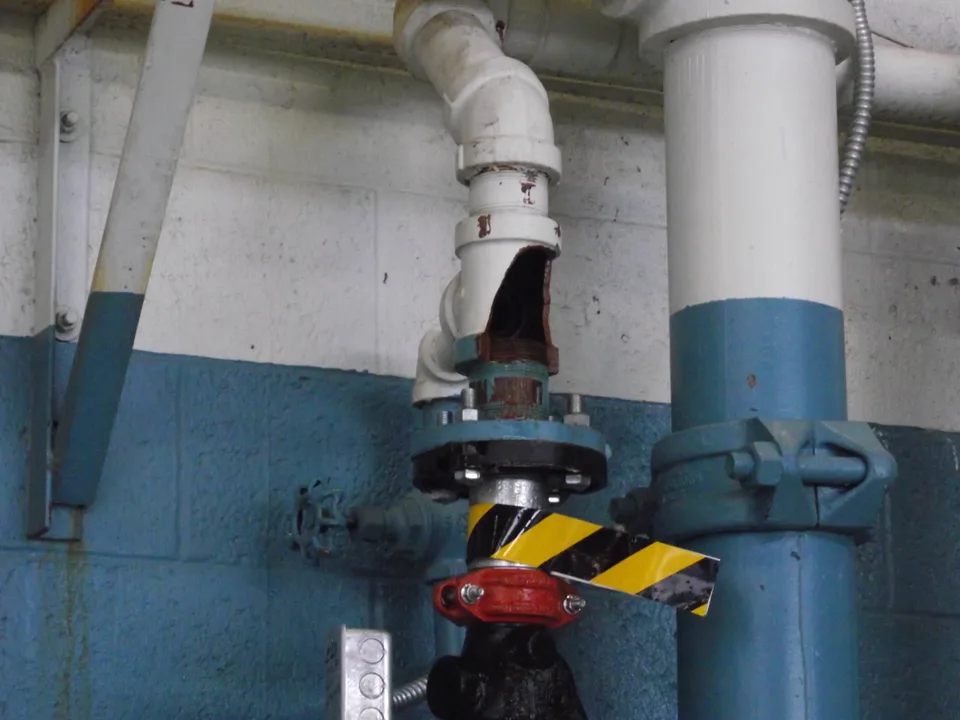
Mild winters make freezes easy to forget here. A typical January night bottoms out at 41 °F on National Weather Service normals. Yet those same normals count about 5 nights each January that reach 32 °F or colder. Bexar County's hazard plan rates winter storms as a Moderate hazard. When one does come, pipes in attics, garages and outside walls are the first to freeze.
A pipe has split
- Close the main. Find the valve where the supply enters the house and turn it off. Water bubbling up by the meter or in the street is a SAWS matter: 210-704-7297, then press 1.
Pipe split? With the water shut off, call a local plumber, then carry on with the steps below.
Phone line opening soonHave this ready when you call
- Your address
- Where the water is and whether the main is off
- When it started
- Keep power and water apart. Don't wade near outlets, cords or appliances. Kill the breakers for wet rooms, but only if you can reach the panel without standing in water.
- Get it on camera. A few shots of the split and the wet areas, taken before cleanup, are what your insurer will ask for if water got into floors, walls or ceilings.
Frozen, but nothing has split
Turn on the tap that pipe feeds, so melting ice has an exit. Then warm the pipe slowly, starting nearest the tap. A hair dryer or a heating pad works. A torch or any open flame does not: it can start a fire. If you can't reach the frozen section, that's a job for a plumber.
Who fixes which part
| Where the break is | Whose repair |
|---|---|
| Inside the house | Yours: call a plumber |
| Between the meter and the house | Yours: SAWS calls this the owner's water service line |
| At the meter, in the main or in the street | SAWS, 210-704-7297, press 1 |
If another utility supplies your water, call that utility's emergency number instead.
When the next hard freeze is forecast
- Let a pencil-thin drip run at taps on lines that are exposed.
- Prop open the cabinet doors under sinks on outside walls.
- Cover the outdoor spigots.
Water already in the walls, flooring or a ceiling? Read water damage first steps. The plumber fixes the pipe; a water damage company dries the house.
What a repair usually costs
National ranges from cost publishers, not San Antonio quotes. The fault decides the price, so ask for it in writing before work starts.
When you call: 4 questions to ask
- What's the trip or diagnostic fee, and is it applied to the job?
- Is the price flat-rate or hourly, and what's the total before you start?
- Will you file the city permit for this job?
- What's your Texas State Board of Plumbing Examiners license number?
A fair written quote shows the parts list, labor, permit, haul-away of old equipment, and the warranty in writing. Check any contractor's license on the TDLR license search before work starts.
What happens when you call
- You're connectedStraight to a local plumber that serves your area and takes calls like yours.
- You get a priceDescribe the problem, ask for a written quote and their license number. No obligation.
Want a price for your home? Call a local plumber for a written quote.
Phone line opening soonCommon questions
Water is bubbling up near my meter after the freeze. Who do I call?
SAWS, at 210-704-7297, press 1. If the break turns out to be between the meter and your house, that is the owner's line under SAWS's description, and a plumber does the repair.
Is it safe to thaw the pipe with a heat gun or torch?
Not with a torch or any open flame. Open the tap, then use gentle heat such as a hair dryer or a heating pad, starting near the tap. If the frozen part is hidden or the pipe has split, call a plumber.
Why do pipes freeze in a city this warm?
Freezing nights are not rare: NWS normals average about 5 in January alone. Pipes in attics, garages and outside walls are the first to go. NWS normals put the January low at 41 °F, but they still average about 5 January nights at 32 °F or colder.
Related guides
Sources
- National Weather Service Austin/San Antonio: San Antonio monthly normals
- San Antonio Water System: Report a problem
- San Antonio Water System: Inspection sign-up form
Costs are typical ranges. Your quote depends on your home. Rules and rebates change; check the original source before you rely on a figure. Something wrong? Tell us via the contact on the Impressum page.